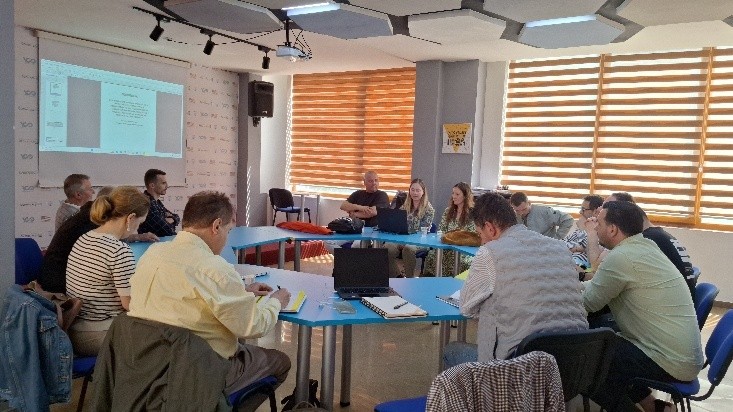
Selecting priority measures through inclusive dialogue is only the first step. Turning those decisions into technically sound, sustainable, and implementable projects requires structured expertise and institutional coordination.
Across the five municipalities (Kavadarci, Strumica, Kumanovo, Gostivar and Struga), the clean air process moved deliberately from community prioritization to professional preparation. What began as bottom-up identification of needs was systematically translated into structured technical documentation and implementation-ready interventions.
Clean air solutions cannot remain conceptual. They must be engineered, validated, and embedded within regulatory, financial, and operational system.
Bottom-Up, Context-Sensitive, Technically Grounded
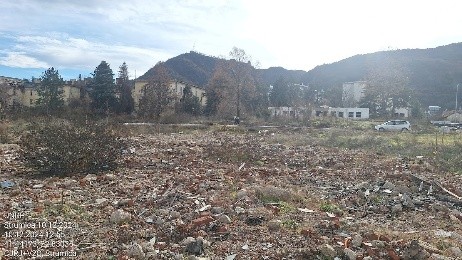
The priorities selected during the Community Forums reflected specific local realities — whether urban greening in dense urban environments, energy efficiency in public buildings, or operational measures to reduce dust resuspension.
However, community selection alone does not guarantee feasibility.

Following prioritization, a targeted layer of technical expertise was mobilized to define and substantiate the precise parameters required for implementation. Interventions were approached in direct response to spatial and environmental conditions, including:
• Public buildings requiring energy efficiency upgrades that respect architectural identity and collective memory, preserving the visual character and public significance of the structures
• Dense urban areas requiring strategically designed green corridors and carefully dimensioned vegetation
• Riverbank zones required ecological rehabilitation and integration of green infrastructure without compromising the functional integrity of the main river channel.
• Drainage catchment areas demanding erosion control measures and resilient landscaping
• Narrow streets requiring maneuverable cleaning equipment
• Wider boulevards requiring higher-capacity mechanization
• Pedestrian promenades requiring surface-sensitive operational planning
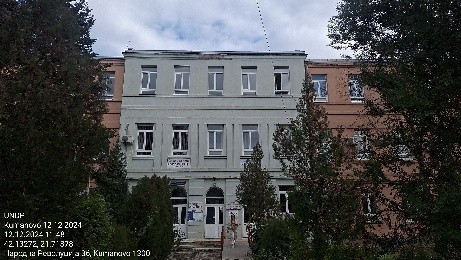
Beyond external experts, the process relied heavily on institutional knowledge. Input from local public enterprises, sectoral departments, and municipal technical staff was essential in refining the scope of each intervention. Their operational experience ensured that proposed solutions were not only environmentally sound, but also practically executable within existing service structures.
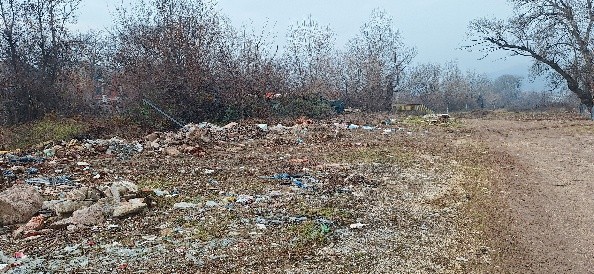
This coordination was facilitated through designated municipal project focal points, who acted as institutional anchors and strategic coordinators within each city — ensuring continuity between community decisions, expert validation, and administrative procedures.
Inclusiveness did not replace expertise.
It strengthened it through structured collaboration.
From Technical Validation to Implementation Readiness
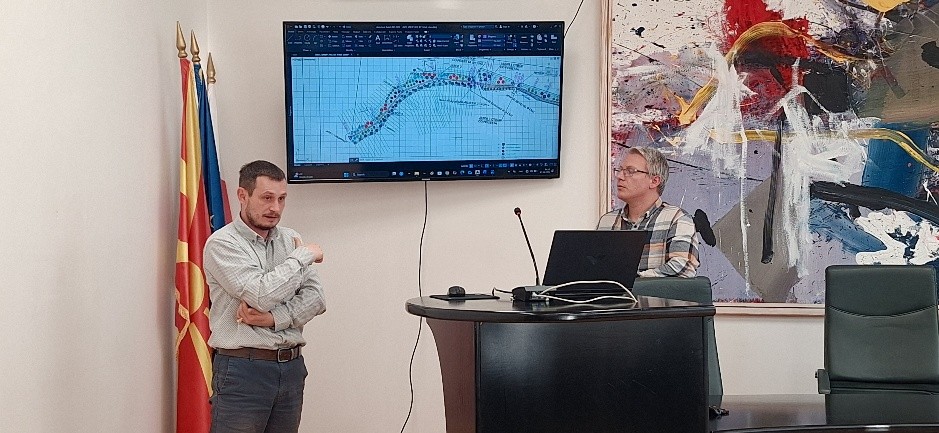
Once context-specific parameters were defined, each intervention entered a structured consolidation phase — moving from technical concept toward institutional readiness.
This stage was not merely about producing documentation. It was about ensuring coherence between environmental intent, spatial feasibility, regulatory alignment, and operational capacity.
Technical refinement was translated into formal project frameworks, enabling clarity in scope, cost structure, compliance pathways, and execution sequencing. Environmental considerations were reviewed alongside planning constraints, while financial estimations were positioned within realistic budgeting environments.
In practical terms, this meant transforming ideas into projects that could be responsibly implemented — not as isolated actions, but as components of a broader system.
Such disciplined preparation reduces implementation risk. It strengthens accountability. And it ensures that clean air interventions are not aspirational commitments, but grounded and executable public investments.
Through this structured transition from validation to implementation logic, municipalities reinforced the credibility and long-term durability of their clean air measures.
Sustainability as Institutional Commitment
If validation ensured feasibility, sustainability ensured continuity.
Sustainability in this process was not treated as a standalone environmental label. It was embedded as an institutional commitment — ensuring that each intervention could function beyond the initial implementation phase.
This meant looking beyond immediate emission reduction and considering long-term governance implications:
• Can the municipality maintain the intervention within existing service structures?
• Does it align with broader spatial and development strategies?
• Are operational responsibilities clearly defined?
• Can the model be replicated or scaled?
Urban greening measures were therefore framed as structural urban elements contributing to long-term spatial resilience.
Energy efficiency upgrades were positioned as operational cost-saving instruments, improving building performance while creating fiscal space for future environmental investment.
Operational measures were evaluated not only for short-term dust reduction impact, but for their integration into municipal service systems and long-term transition pathways.
Sustainability, therefore, became embedded within municipal logic — not treated as an external requirement, but as a design principle shaping decision-making.
Institutional Strengthening Through System Integration
A central outcome of this approach lies in strengthening municipal institutions through system integration.
Environmental initiatives often begin as project-based efforts. However, long-term impact depends on how effectively these efforts are embedded within formal governance structures.
In this process, air quality considerations were systematically integrated into municipal planning workflows, documentation standards, and coordination mechanisms. Technical review procedures were clarified. Interdepartmental collaboration was strengthened. Decision-making criteria were aligned with strategic planning instruments.
Municipal focal points served as institutional anchors, ensuring continuity between community engagement, technical preparation, and administrative processes.
By embedding clean air measures within official planning, procurement, and supervision frameworks, municipalities reinforced structural continuity.
Environmental competence became part of institutional architecture — not confined to a single project cycle.
This shift marks a transition from project-based intervention toward system-based governance.
Turning priorities into systems means that clean air measures are no longer dependent on momentum alone. They are anchored within structured procedures, coordinated responsibilities, and long-term planning logic.
Community dialogue provided legitimacy.
Technical expertise provided precision.
Institutional integration provided durability.
In Kavadarci, Strumica, Kumanovo, Gostivar, and Struga, selected clean air priorities were not only endorsed — they were methodically translated into structured municipal systems capable of sustaining environmental progress over time.
This is where inclusive governance meets technical rigor.
And it is precisely at that intersection that sustainable clean air action becomes lasting — not as a temporary intervention, but as an embedded component of local governance architecture.
Authors:
Aleksandra Dimova Manchevska, Project Manager (Environmental Engineer, MBA) of the “Scaling-up actions to tackle air pollution” project
Dren Nevzati, Project Monitoring Associate (Architect, MSc)
Trajancho Naumovski, Project Assistant (Economist, BSc)
The views expressed in this document are those of the authors and do not necessarily reflect the views of UNDP, Sweden as the donor, or other project partners.
*The project „Scaling-up actions to tackle air pollution“ is a component of the UNDP Framework Programme funded by Sweden. The project is implemented by the United Nations Development Programme (UNDP) in North Macedonia in partnership with the Ministry of Environment and Physical Planning and Municipalities of Kavadarci, Kumanovo, Gostivar, Struga and Strumica.
The Programme also includes the project „Building municipal capacities for project implementation”.