Air quality governance is often perceived as a technical responsibility of institutions — measured in monitoring stations, emission factors, and regulatory limits. Yet sustainable environmental transformation requires something more fundamental: democratic legitimacy.
Across five municipalities, Strumica, Struga, Gostivar, Kavadarci and Kumanovo, clean air became a subject of structured civic dialogue within the project “Scaling up to tackle Air Pollution”* , implemented by UNDP funded by Sweden. Through the Community Forum model, environmental planning was transformed into democratic infrastructure.
This was not a symbolic consultation process. It was a structured, two-session engagement in each municipality, mobilizing 643 citizens — reflecting gender balance and broad representation from youth organizations, civil society, municipal structures, and local communities— who discussed, proposed and ultimately prioritized measures to tackle air pollution.
Evidence Before Opinion: From Data to Collective Choice
The Community Forum process placed evidence at the center of public dialogue.
The discussion opened with a structured presentation of findings from a one-year air quality monitoring campaign conducted by the AMBICON laboratory at University “Goce Delchev” in Shtip, offering participants a clear picture of the dominant local pollution sources — traffic, heating, waste management, and limited green infrastructure.
At the same time, draft Air Quality Plans were presented and openly discussed, allowing citizens to see how scientific findings translate into strategic planning instruments at the municipal level. The dialogue was not one-directional, proposals and recommendations emerging from the forum discussions were subsequently reflected in the improved local Air Quality Plans, reinforcing the link between community input and formal environmental policy.

To further ground the discussion in global practice, participants were also introduced to “Global Wisdom for Clean Air – A Catalog of Practical Solutions” an initiative supported by the UNDP Accelerator Lab. The catalog presents examples of already implemented solutions to air pollution challenges across different geographical regions, outlining the required resources, potential implementation challenges, and expected outcomes of each measure.
Although the examples are not drawn from North Macedonia, their relevance for local application was carefully assessed in cooperation with University “Goce Delchev” – Shtip and Pavlina Zdraveva, Climate Change and Sustainable Development Expert. This assessment helped identify which solutions could realistically be adapted within the municipal context and aligned with local institutional capacities.
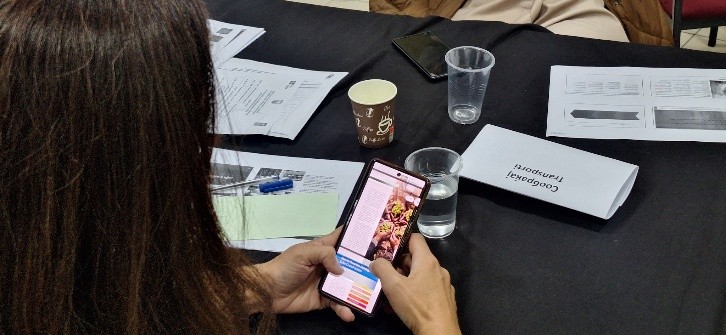
This approach ensured that the discussion was not abstract or politically driven. It was data-informed and solution-oriented. Citizens did not debate air pollution in general terms — they examined concrete, feasible options directly linked to identified sources.
Through structured dialogue, clarification, and exchange of proposals, participants moved from understanding the problem to collectively determining priorities. Each municipality ultimately selected one priority measure for implementation, resulting in five locally endorsed interventions.
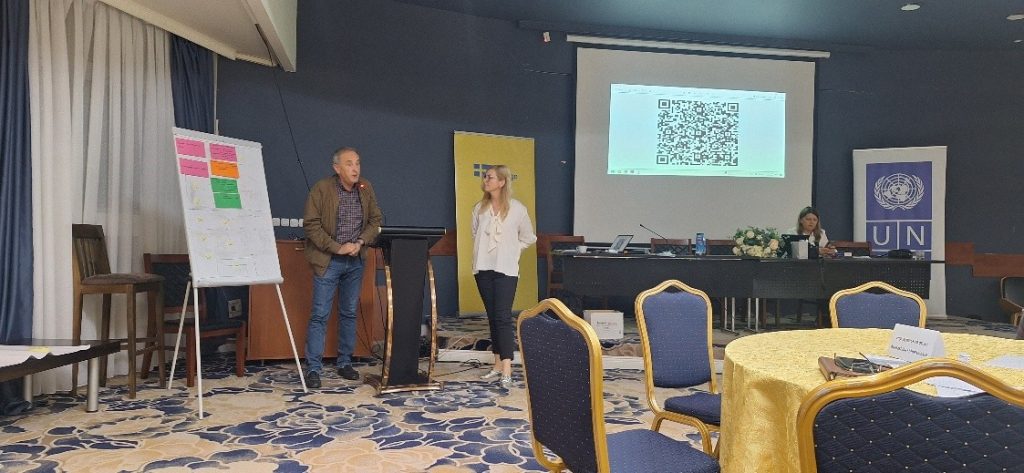
The chosen measures reflected local contexts and needs — ranging from urban greening and green corridors to energy efficiency in public buildings, and mechanization to reduce dust resuspension. The prioritization was guided by clear and transparent criteria: relevance to pollution sources, feasibility within budget and timeframe, measurable and visible impact, social inclusivity, and long-term sustainability.
Clean Air as Democratic Infrastructure
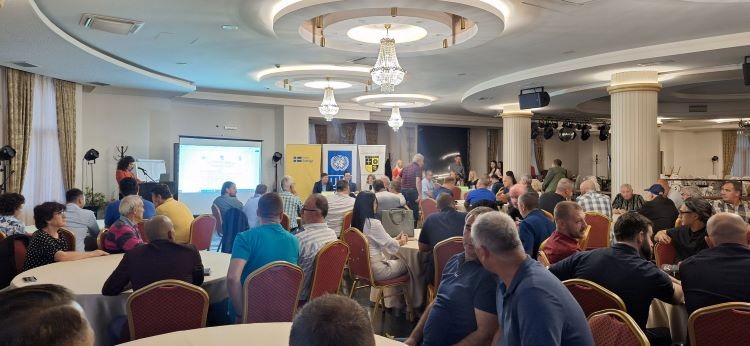
The Community Forum model demonstrates that air quality policy is not only a technical field — it is a democratic one.
When scientific evidence is presented openly, draft plans are discussed publicly, and decisions are made through transparent criteria, environmental planning becomes part of democratic infrastructure. It moves beyond administrative procedure and becomes a shared civic process.
This approach strengthened:
• Institutional transparency
• Public trust in local decision-making
• Evidence-based prioritization
• Shared responsibility between citizens and municipalities
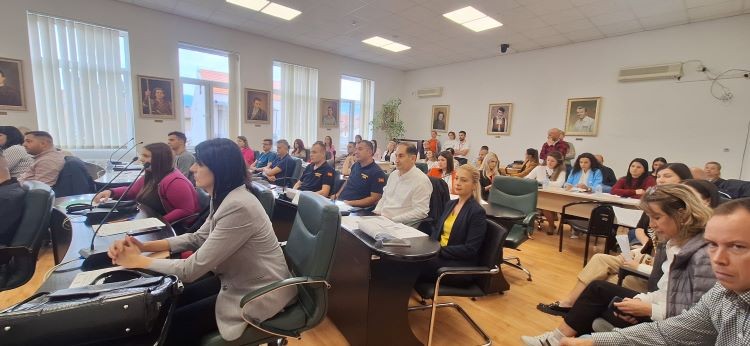
Importantly, the process created continuity. By forming local working groups and linking selected measures to formal Air Quality Plans, citizen engagement was embedded into institutional frameworks rather than remaining a one-time consultation.
Air pollution cannot be addressed through isolated investments alone. It requires alignment between science, policy, institutions, and citizens.
Across the five municipalities, residents were not passive observers of environmental planning. They were active participants in defining priorities and shaping local responses.
Clean air, in this case, is not only an environmental objective.
It is a democratic outcome.
And democratic outcomes endure beyond a single project cycle — because they are rooted in collective ownership.
Authors:
Aleksandra Dimova Manchevska, Project Manager (Environmental Engineer, MBA) of the “Scaling-up actions to tackle air pollution” project
Dren Nevzati, Project Monitoring Associate (Architect, MSc)
Trajancho Naumovski, Project Assistant (Economist, BSc)
The views expressed in this document are those of the authors and do not necessarily reflect the views of UNDP, Sweden as the donor, or other project partners.
*The project „Scaling-up actions to tackle air pollution“ is a component of the UNDP Framework Programme funded by Sweden. The project is implemented by the United Nations Development Programme (UNDP) in North Macedonia in partnership with the Ministry of Environment and Physical Planning and Municipalities of Kavadarci, Kumanovo, Gostivar, Struga and Strumica.
The Programme also includes the project „Building municipal capacities for project implementation”.